🇩🇪 | Home | The House | Experiences | Location | Book Now | Contact
✧ WILD HORSES • LAGOON LIFE • WHALE WATCHING • NATURE & WILDLIFE • WINE EXPERIENCES • ADVENTURES • OUR PICKS ✧
Where Water, Wilderness & Wonder Meet
─── ✧ ───
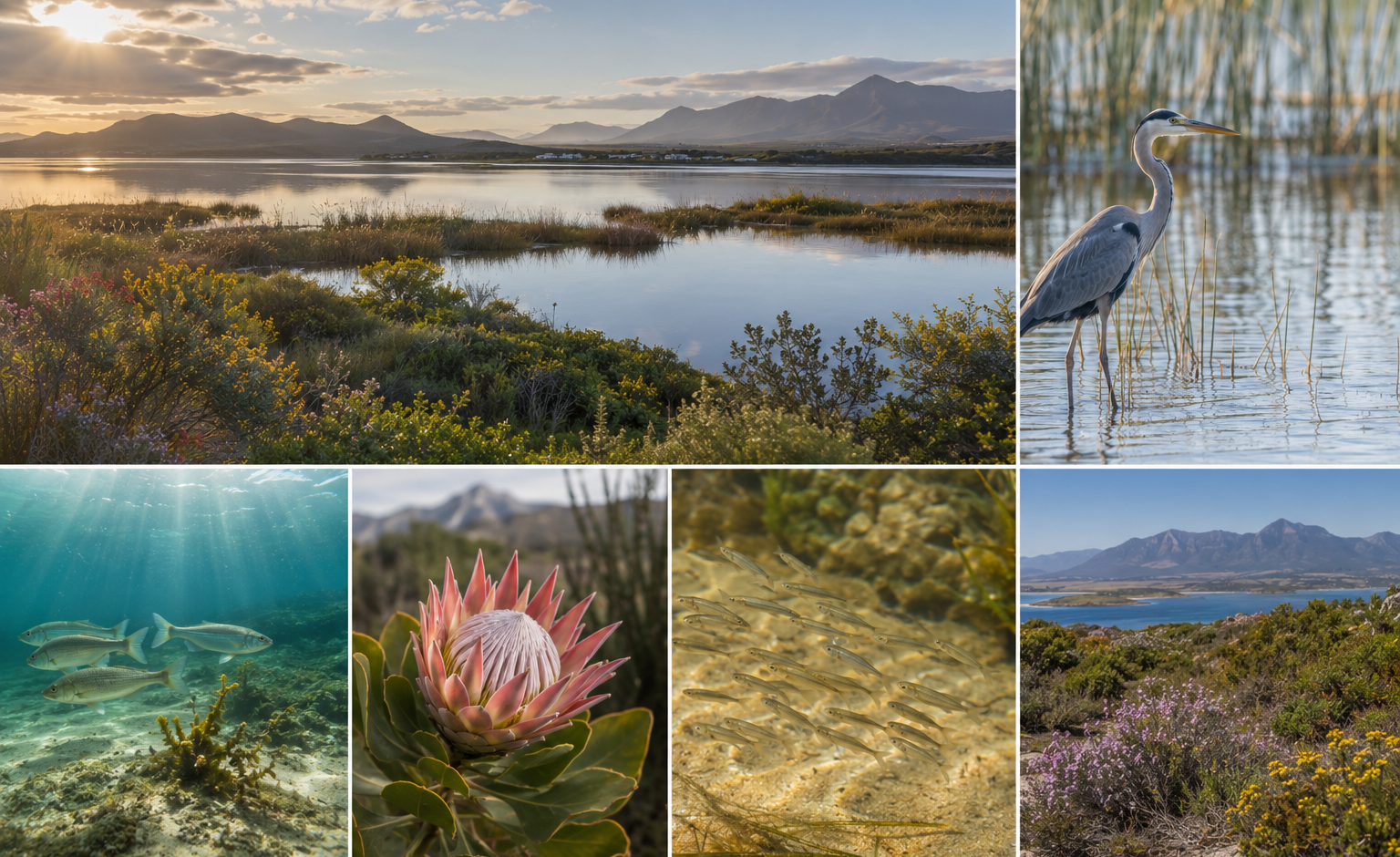
An ever-changing lagoon. A plant kingdom found nowhere else on Earth. And an extraordinary abundance of life that makes this corner of the Whale Coast one of South Africa’s most fascinating natural environments.
At first, it is simply the beauty that makes you stop and look: the waters of the Bot River Lagoon, wide reed beds, untouched fynbos and mountains stretching across the horizon.
But the closer you look, the more extraordinary this place becomes.
Around MBIZI lagoon house, some of the Western Cape’s most fascinating natural habitats come together. The Bot River Lagoon is not simply a lake, but part of a living estuarine system that is constantly changing. Water levels and salinity shift, the connection to the ocean opens and closes – creating a remarkable habitat for an astonishing variety of fish and birdlife.
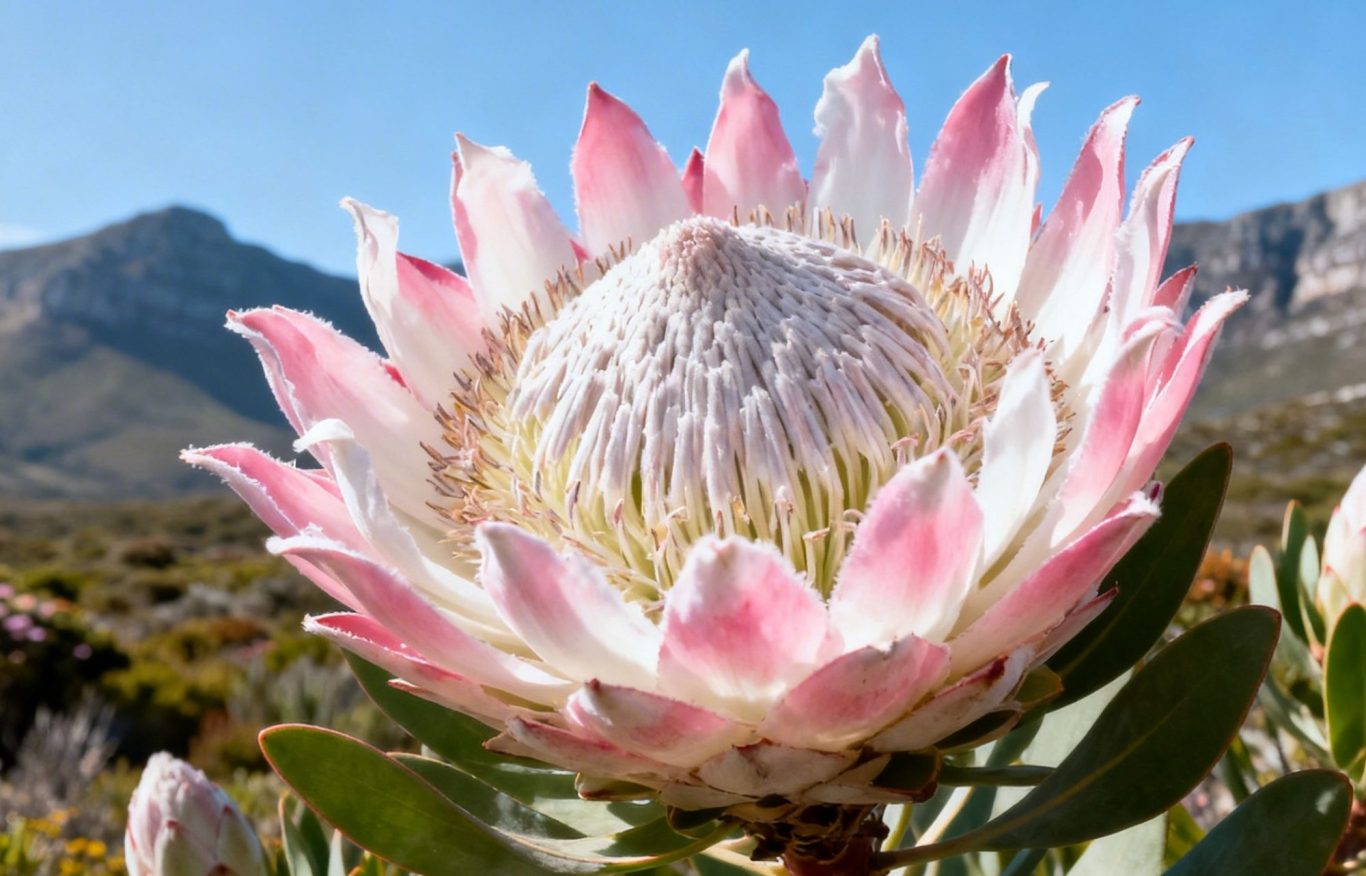
Along its shores, another world begins: the fynbos of the Cape Floral Kingdom, one of the richest and most diverse plant regions on our planet. Many of the plants that grow so naturally here are found nowhere else on Earth.
And that is what fascinates us so much about this place: what at first appears simply beautiful reveals itself, the closer you look, as a small wonder of nature.
🐟🦩 A Lagoon Alive with Nature
─── ✧ ───
From the shore, the lagoon can seem wonderfully peaceful. Beneath the surface and above the water, however, an extraordinary ecosystem is constantly at work.
The Bot River Lagoon forms part of the Bot-Kleinmond Estuarine System, one of the region’s most important wetland environments. Its sheltered, nutrient-rich waters provide a vital nursery for many fish species, while thousands of resident and migratory birds depend on the estuary for food, shelter and resting grounds.
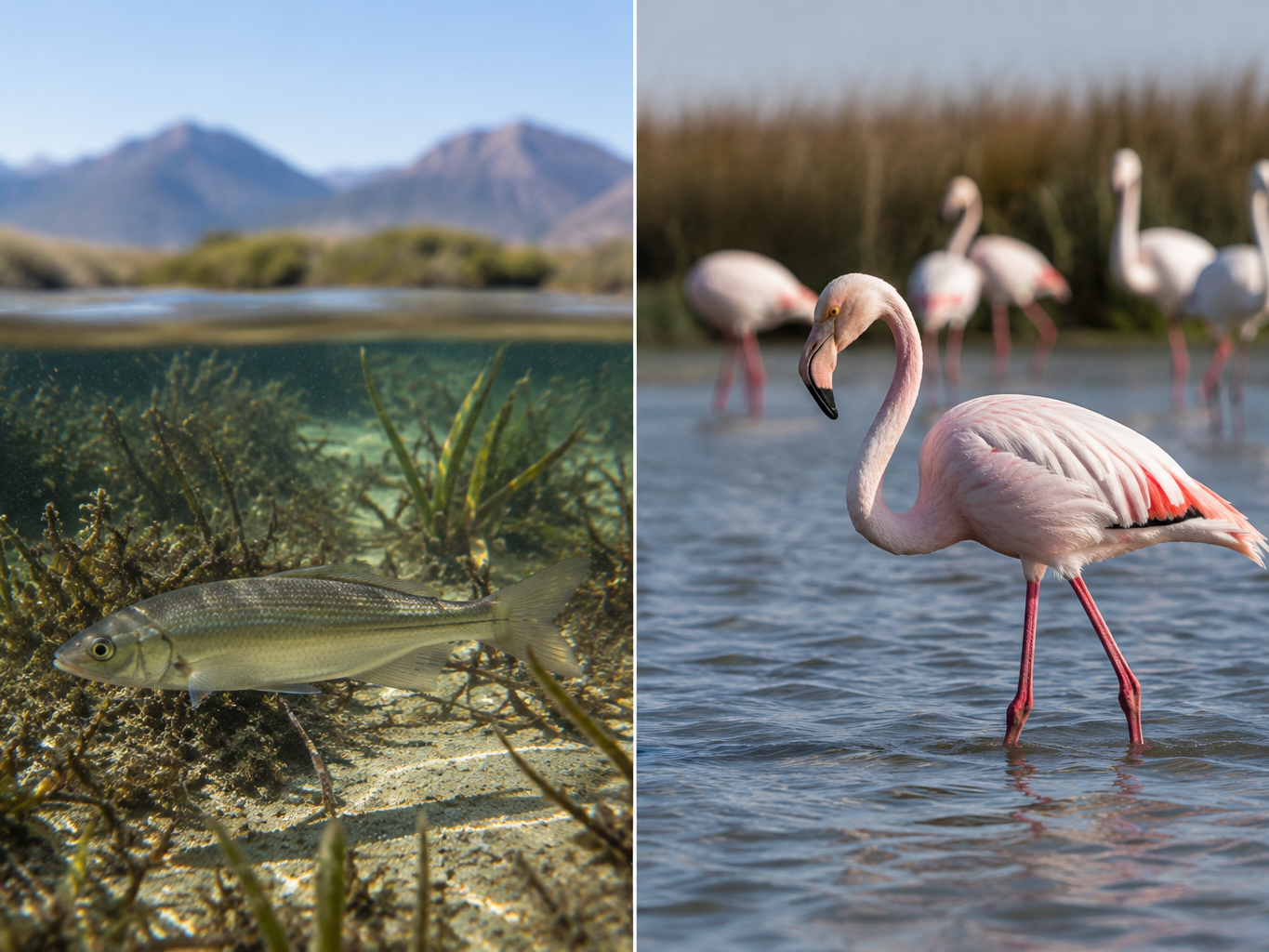
What makes this ecosystem particularly fascinating is the way its wildlife changes with the lagoon itself. When the connection to the ocean is open, conditions favour different fish, waders, gulls and terns. When it closes and water levels rise again, other species benefit – and shallower areas can become feeding grounds for flamingos and numerous waterbirds.
The lagoon is therefore never simply “full” or “empty”. As the water changes, so does the life within it.
🐟 A Tiny Fish Found Almost Nowhere Else
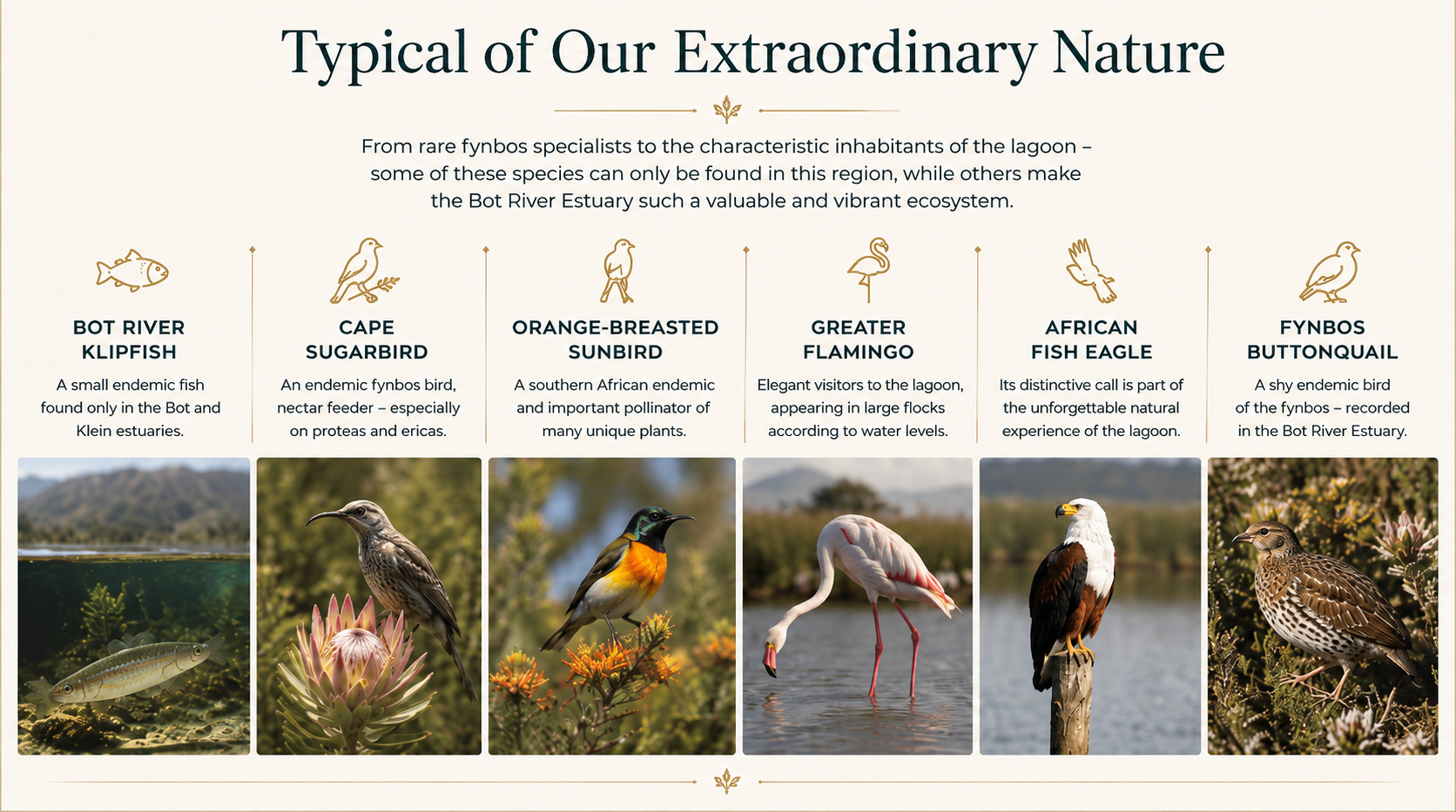
One of the lagoon’s most remarkable inhabitants is the Bot River klipfish. This small endemic fish is known to occur only in the Bot and Klein estuaries of the Western Cape. Its population can fluctuate considerably – and even this is connected to the natural rhythm of the estuaries opening and closing to the sea.
Other fish species also depend on estuaries such as this one as protected nurseries. Among them is the White Steenbras, a South African endemic and endangered species whose juveniles spend their early years in sheltered estuaries before eventually moving out to sea.
🦩 A Paradise for Birdwatchers
And then, sometimes, all you need to do is look up. The wider Cape Whale Coast conservation area is home to more than 230 bird species, including at least 86 species of waterbirds. Historically, counts of more than 40,000 birds at the same time have even been recorded across its wetlands.
Around the Bot River Lagoon, depending on the season and water levels, you may encounter Greater and Lesser Flamingos, pelicans, herons, cormorants, ducks, waders and birds of prey. And then there is one sound that is difficult to forget: the distinctive call of the African Fish Eagle, carrying across the water.
That is part of what makes this landscape so captivating: you do not always need to go on safari to experience remarkable wildlife. Sometimes, you simply need to sit still, look – and let nature come to you.
🌺 A Plant World Found Nowhere Else
─── ✧ ───
If you are travelling through the Whale Coast for the first time, it is easy to see fynbos simply as beautiful, wild coastal vegetation. But look a little closer, and you discover something far more extraordinary.
The Cape Floral Kingdom is the smallest of the world’s six floral kingdoms – yet one of the richest in biodiversity. Within this remarkably compact region grow thousands of different plant species, an exceptionally high proportion of which are found nowhere else on Earth.
And right within this extraordinary botanical world lies the Bot River Lagoon.
🌿 Fynbos – Wild, Subtle & Incredibly Diverse
Fynbos is not a landscape of towering trees or lush tropical greenery. Much of its beauty reveals itself only when you slow down and look more closely.
Among the low-growing shrubs you will discover proteas, ericas and restios, tiny flowers, unusual shapes and an ever-changing palette of colours. Some plants bloom only briefly, while others are perfectly adapted to strong winds, nutrient-poor soils and even fire.
That is why this landscape looks a little different in every season.
During the South African spring, countless flowers transform the fynbos into a beautiful mosaic of colour. Yet even outside the flowering season, this ancient vegetation has a character all its own – raw, wild and wonderfully imperfect.
🔥 A Landscape That Needs Fire to Flourish
It may sound destructive, but fire is an essential part of the natural cycle here: fynbos needs fire.
Over thousands of years, many species have adapted so closely to periodic wildfires that heat or smoke can help trigger their seeds to germinate. And after a fire, something remarkable begins. New shoots emerge, flowers return and gradually the landscape renews itself.
It is one of nature’s most fascinating examples of how life has adapted to the unique conditions of this region.
💙 Our MBIZI Moment: At some point during your stay, take a moment to look closely at this seemingly understated vegetation. Often it is the tiny flowers, extraordinary shapes and intricate details that reveal why the Cape Floral Kingdom belongs among the great natural treasures of our planet. Because sometimes, the most extraordinary things are not those you notice from afar – but those you discover when you take the time to look a little closer.
From our MBIZI Travel Guide
Discover even more about the fascinating nature of the Whale Coast – from the remarkable wildlife and plant life of the Bot River Lagoon to the unique ecosystems that make this region one of South Africa’s most extraordinary natural treasures.
Where extraordinary
experiences feel at home
At MBIZI lagoon house, experiencing nature does not begin with an excursion. The Bot River Lagoon and its remarkable wildlife and plant life are right on your doorstep – and sometimes, all it takes is a glance from the terrace to discover what makes this place so special.
Watch birds soaring across the water, listen for the unmistakable call of the African Fish Eagle, or simply notice how the light, water and landscape transform throughout the day.
Because some of the most beautiful encounters with nature are the ones you never have to leave home to find.
MBIZI
lagoon house
─────♡─────
Where wild horses roam and whales return.
Your luxury escape on the Whale Coast
Explore
─── ✦ ───
Experiences
─── ✦ ───
Stay Informed
─── ✦ ───
Get in Touch
─── ✦ ───
Questions before booking?
We' re happy to help.
✉ info@mbizilagoonhouse.com
☎ +27 (0)71 0566202
📍 Fisherhaven, Hermanus,
Whale Coast, South Africa
🌐 www.mbizilagoonhouse.com
Let´s stay Connected
─── ✦ ───
Come behind the scenes at MBIZI.
Choose your Language
─── ✦ ───
Instantly translate this page.